Introduction
2026 marks the beginning of the 14th Five-Year Plan. As a hub for artificial intelligence and a globally influential center for technological innovation, Shanghai is accelerating the transformation of “AI+” from blueprint to reality. From smart screens in homes to intelligent computing centers empowering businesses, from low-flying drones to digital public phone booths on the streets, a comprehensive intelligent network is being rapidly woven. This network is the “Zhiyun Shanghai” initiative by China Telecom Shanghai.
“Zhiyun Shanghai” is not just a broadband service, a cloud, or a single product; it is a complete intelligent service system aimed at the digital transformation of the city. With applications like all-optical WiFi, Tianyi Smart Screen, Enterprise Cloud Network, 5G, Cloud Broadband, and AI STORE, each piece acts like a puzzle, collectively forming the solid foundation of Shanghai as an “AI City.” Supporting all of this is a spirit of craftsmanship—“Ingenuity in Intelligence.” Six model workers from Shanghai Telecom—Xu Jun, Qiu Lina, Hua Jing, Chen Zhaobo, Zhu Shu, and Song Jiaqi—have dedicated decades of focus and research to infuse these six applications with the most reliable essence. When “Zhiyun Shanghai” meets the model workers of the new era, technology gains warmth, and intelligent benefits find direction.
All-Optical WiFi: Making Every Room the Best Place to Connect
For many families in Shanghai, all-optical WiFi is quietly changing their lives. It represents not just an ordinary broadband upgrade but a revolution from “fiber to the home” to “fiber to each room.” Traditional broadband signals may not reach every corner of the house, but all-optical WiFi uses fine optical fibers to deliver gigabit or even terabit bandwidth directly into every room. 4K video streaming, zero-latency cloud gaming, and seamless coordination of smart home devices—these scenarios, once only imagined by tech enthusiasts, are now becoming everyday realities for Shanghai families.
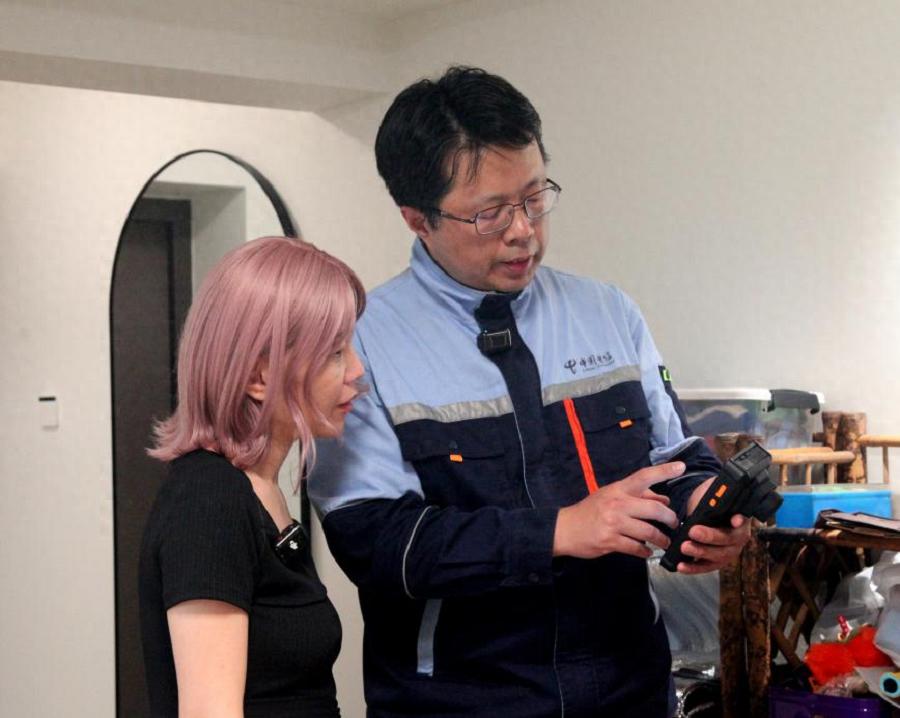
What’s remarkable is that all-optical WiFi has not abandoned older neighborhoods. Frontline workers like Xu Jun have invented tools to facilitate the installation of fiber optics in old buildings. Their invisible fibers, as thin as hair, run along walls, almost undetectable, yet they bring high-speed internet to thousands of households. Xu Jun has worked as a line worker for nearly thirty years, transitioning from copper cables to fiber optics, from megabits to gigabits. He emphasizes, “Only Chinese line workers can find the most suitable home network solutions for Chinese families.” This dedication transforms all-optical WiFi from merely a technology into a source of reassurance. As the era of AI homes arrives, all-optical WiFi becomes the most reliable “nerve” delivering computing power and intelligence to every corner.
Tianyi Smart Screen: The Core AI Entry Point for Families
The Tianyi Smart Screen is a strategic AI product for family scenarios under “Zhiyun Shanghai.” The 2026 government work report first proposed creating a new form of intelligent economy, clearly stating the need to deepen and expand “AI+” and promote the accelerated adoption of the next generation of intelligent terminals and agents. Amid this wave of intelligent economy, the Tianyi Smart Screen is evolving from a traditional audio-visual terminal into a comprehensive “core AI entry point for families” that integrates interaction, control, and services.
It deeply integrates China Telecom’s independently developed star model capabilities, connects with AI model engines like DeepSeek, and creates an AI service chain, pioneering the “end-cloud collaborative family intent perception hub.” Every voice interaction—whether booking tickets, consulting a doctor, practicing a language, or calling for emergency assistance—relies on real-time token calls and precise computing power scheduling.
The Tianyi Smart Screen serves as a smart hub for enhancing family life through AI, becoming the first true “AI entity” in many households. As a control center, it can fully coordinate smart home devices for unified management; as a communication center, it supports high-definition video calls and multi-party conversations; as a service center, it expands the AI skills matrix, allowing users to access weather queries, news updates, ticket bookings, and entertainment services without leaving home; and as a community integration center, it breaks down information barriers between families and communities, enabling residents to view community announcements, remotely unlock doors, and monitor community security through the smart screen. In terms of safety, the Tianyi Smart Screen links with smart gas shut-off devices to intelligently identify risks of gas stove fires and provides voice reminders, remote controls, and timed shut-off to eliminate hazards. It also connects to professional medical resources, supporting health consultations and online medical inquiries to comprehensively protect family health.
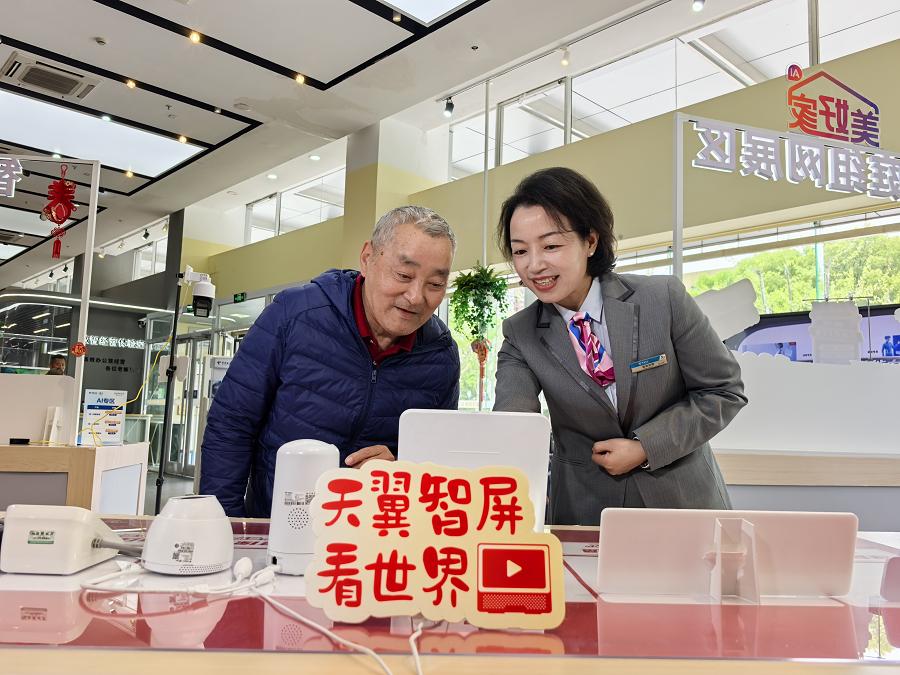
National model worker Qiu Lina has dedicated nine years to serving the community, ensuring no one is left behind in the digital age. She has witnessed many elderly individuals struggling with smart devices and understands that no matter how advanced technology is, if people cannot use it, it is not good technology.
In the Tianyi Smart Screen “experience classroom” at the Shanghai Telecom service center, Qiu Lina patiently teaches elderly residents how to use it in Shanghai dialect. She states, “The best technology should be accessible, understandable, and reliable for everyone.” With the Tianyi Smart Screen, she continues her mission to bridge the digital divide, making smart technology easy to understand and ensuring that every elder can enjoy the beauty of digital life, allowing the cutting-edge token economy to warmly enter the living rooms of ordinary people.
Enterprise Cloud Network: Installing the “Intelligent Hub” for Various Industries
As the 14th Five-Year Plan begins, digital transformation has become a key issue affecting Shanghai’s industrial competitiveness. By 2025, the scale of Shanghai’s AI industry is expected to exceed 550 billion yuan, with a growth rate of over 30%, gathering nearly 400 AI enterprises. Building on this high base, Shanghai has set even more challenging goals for the 14th Five-Year Plan: to establish 500 advanced intelligent factories and achieve an industrial robot application density of 600 units per 10,000 people.
Advanced intelligent factories require comprehensive intelligence, and the Enterprise Cloud Network is the intelligent foundation delivered by “Zhiyun Shanghai” to government and enterprise clients. It is not merely about “going to the cloud” or “connecting networks”; it integrates the cloud, network, data, and applications into one—where the cloud represents computing power, the network serves as the lifeblood, data provides nourishment, and applications are the branches and leaves. The scattered information islands are connected, allowing the digital body of enterprises to truly come to life. In other words, an enterprise does not need to purchase servers, hire algorithm engineers, or build intelligent computing centers; it can call upon AI services like large models, computer vision, and natural language processing as needed. For enterprises, the complexity and cost barriers of digital transformation are gradually being lowered by “Zhiyun Shanghai”—the Enterprise Cloud Network enables digital capabilities to flow like tap water, available wherever needed.
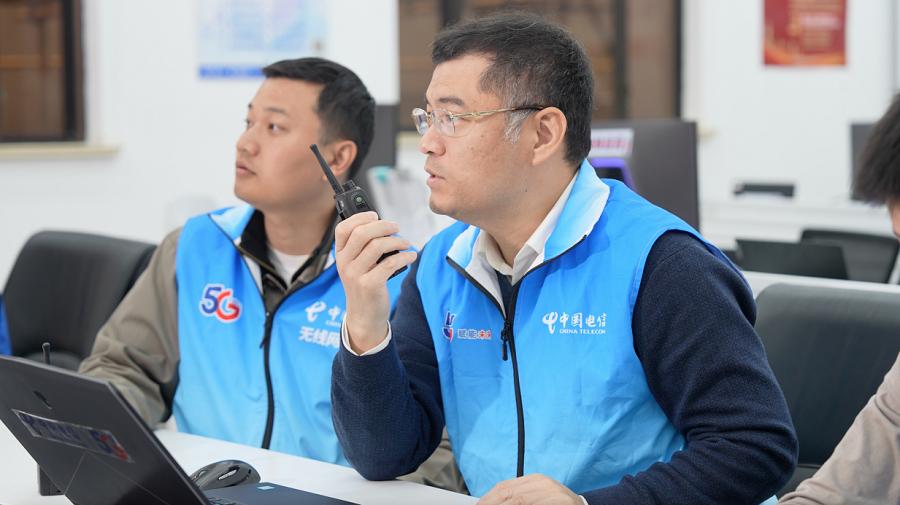
The value of the Enterprise Cloud Network is vividly illustrated on a real production line. A manufacturing company aimed to move all computers and data to the cloud for full-process intelligence. National model worker Hua Jing and her team spent three months on the production line—testing and adjusting parameters at night while the line operated during the day. Ultimately, scattered data and applications were re-integrated and shared in the cloud, giving cold machines a warm touch of intelligence.
Today, the Enterprise Cloud Network is deeply integrated into Shanghai’s strategic goals for building advanced intelligent factories under the 14th Five-Year Plan. Both large and small enterprises can gain “lightweight AI” capabilities through it. The concept of “Cloud + Network + AI” is transforming Shanghai’s various industries from piecemeal digital fixes to comprehensive intelligent reconstruction. The foundation that “Zhiyun Shanghai” carries is not just urban infrastructure but the “intelligent heart” of the city’s industrial system.
5G: Weaving the Neural Network of Intelligent Connectivity
5G is no longer a new term, but within the framework of “Zhiyun Shanghai,” it has been given a new mission. It is not just about faster video streaming; it supports the core framework of future industries such as low-altitude economy, smart shipping, industrial internet, and vehicle-road collaboration, upgrading “Internet of Everything” to “Intelligent Connectivity of Everything.”
In Shanghai, 5G is performing many “invisible but extremely important” tasks. In Baosteel’s factory, 5G-enabled unmanned heavy-duty vehicles navigate seamlessly without drivers or breaks; in hospitals, remote diagnosis systems allow experts to operate surgical robots thousands of miles away via 5G networks; the VR live broadcasts at the Import Expo immerse global audiences; and low-altitude drones, utilizing the integrated sensing capabilities of 5G-A, can identify illegal constructions while flying and be accurately located and avoid collisions by base stations.
Behind these scenes are a group of “network doctors.” National May Day Labor Medal winner Chen Zhaobo is one of them. From 2G to 5G, he has witnessed every leap in mobile communication. He leads his team to climb high buildings, dig underground, and guard coastal areas, all to ensure that “full signal” becomes the norm in this city. When asked what he gains from working with invisible waves, he replies, “Full signal is the best companionship.” This statement encapsulates the craftsmanship behind 5G—it is silent yet omnipresent; it is intangible yet adds value to every connection.
Cloud Broadband: The World’s Largest “One Jump into Computing” Network
If traditional broadband is a “water pipe,” then cloud broadband is a complex of “water plant + water network + water reservoir.” Its revolutionary aspect lies in not just providing faster speeds but moving the user-side gateway functions to the cloud, making the cloud the first stop for users to access the internet. Traditional broadband only offers connectivity, while cloud broadband provides an integrated intelligent service of “connectivity + storage + computing”—one jump into computing. Shanghai, with over 4.35 million cloud broadband users, holds the world record for the largest number of users.
How has cloud broadband changed the landscape? For example, digital public phone booths on the street used to only allow phone calls; now, they can call taxis, make appointments, and provide multilingual travel guides for foreign tourists. These services are not due to hidden computers in the booths but because the booths utilize cloud broadband to directly access AI capabilities in the cloud. In talent apartments, tenants can activate broadband by scanning a code, choosing their own speeds and payment methods. Drones monitoring rivers and identifying waste transmit their data through cloud broadband to AI analysis platforms, triggering immediate responses to issues.
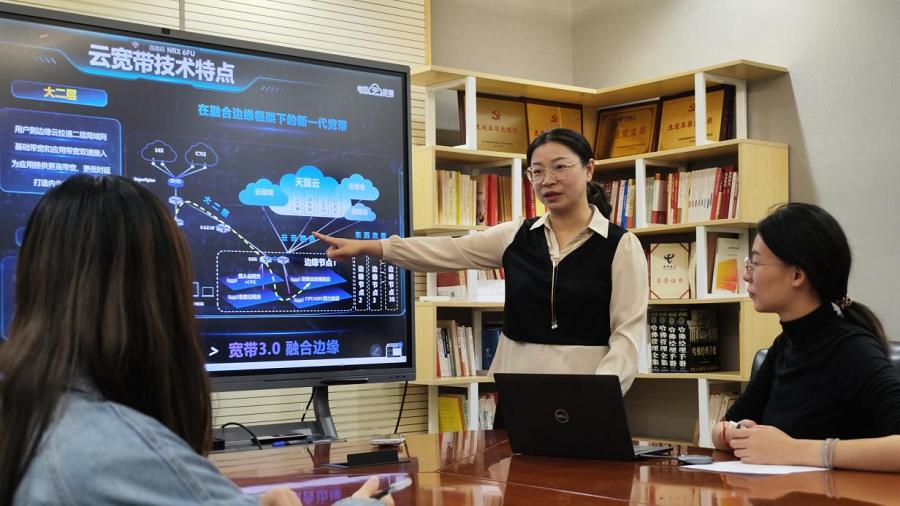
Zhu Shu, a labor model in Shanghai and one of the architects of the cloud broadband network, has been working on its construction since 2022. After over 300 days and nights and more than 1,000 online and offline meetings, Shanghai Telecom has turned the vision of a “cloud city” into reality. Zhu Shu states, “The public does not need to understand the technology; they just need to feel the convenience. No matter how high the foundation is, without applications taking root, it is just a castle in the air.” This phrase has become the motto for cloud broadband’s continuous deep rooting. When a city’s broadband network transforms from a mere conduit to a gateway for computing, and when cloud broadband evolves from a “technical foundation” to an “application ecosystem,” it becomes a warm connection flowing at the fingertips of every Shanghai citizen.
AI STORE: Making AI as Accessible as Water and Electricity
After addressing connectivity, computing power, and some application scenarios, “Zhiyun Shanghai” also needed to answer a crucial question: how to make AI capabilities truly accessible, rather than a monopoly of large enterprises? AI STORE provides the answer. It functions like a large supermarket of AI capabilities—not selling snacks or drinks but computing power, models, algorithms, and data services. Enterprises can enter, “purchase” what they need, and pay for what they use, without having to build their own server rooms or maintain teams. For instance, an e-commerce company wanting to implement automatic product image review, which previously might have taken three to four months and cost hundreds of thousands, can now simply click a few times in AI STORE, call an image recognition API, and complete the task in minutes, paying per usage.
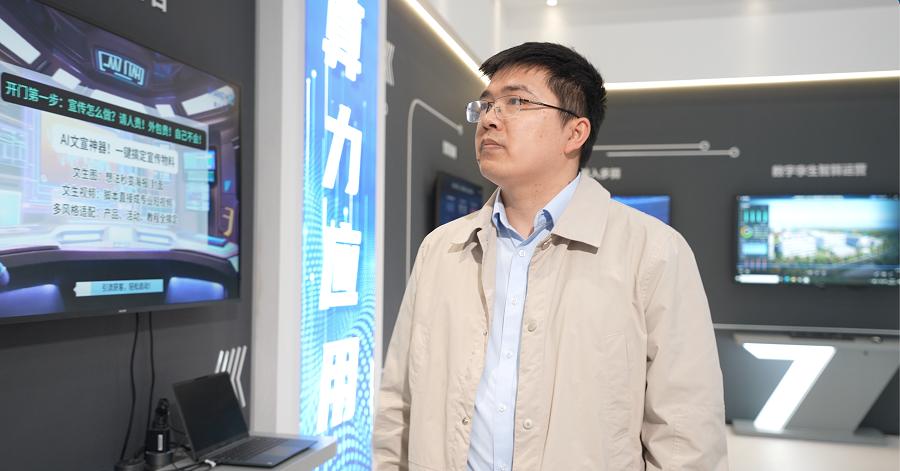
The birth of AI STORE stems from a simple question: how to make AI affordable for small and medium enterprises? National model worker Song Jiaqi, known as the “AI STORE manager,” has seen too many companies deterred from AI due to high costs and talent shortages. He and his team have broken down complex AI technologies into reusable “parts,” packaged and priced them, placing them on the shelves. His office is filled with industry white papers covering fields from healthcare to manufacturing, from education to tourism, each aimed at translating technology into real business applications.
Today, AI STORE has launched hundreds of AI capabilities. It has enabled a community health center to digitize handwritten medical records in just one day; relieved a primary school teacher from the fatigue of grading hundreds of papers; and allowed a startup to develop its own intelligent customer service within three days. When the barriers to AI are lowered sufficiently, sparks of innovation can ignite from any corner. This embodies the deepest vision of “Zhiyun Shanghai”—to make AI approachable and innovation accessible to everyone.
Conclusion
All-optical WiFi brings light into every room, making homes comfortable for AI; Tianyi Smart Screen, powered by star models, evolves intelligence from “understanding” to “comprehending”; the Enterprise Cloud Network reconstructs the intelligent foundation for industries, giving every enterprise a chance to stand on the shoulders of AI; 5G weaves the neural network of connectivity, enabling the city to sense its environment; cloud broadband, with its massive scale of “one jump into computing,” makes computing power as accessible as water and electricity; and AI STORE opens a door for anyone with an idea to enter the world of AI.
These intelligent applications each fulfill different missions within the framework of “Zhiyun Shanghai,” yet they interlock and support one another. The six model workers—Xu Jun, Qiu Lina, Hua Jing, Chen Zhaobo, Zhu Shu, and Song Jiaqi—have infused each application with the soul of “craftsmanship in intelligence” through decades of dedication. They work closely with users, guard service centers, oversee production lines, patrol venues, sit in late-night meetings, and immerse themselves in codes and white papers. It is this dedication to “rooting down” that supports the “upward growth” of Zhiyun Shanghai.
From “Magic City” to “Model City,” every step of Shanghai’s evolution into an AI city embodies the belief in “Zhiyun Shanghai, Craftsmanship in Intelligence.” The intelligent applications of “Zhiyun Shanghai” uphold the digital sky, ensuring that AI is not only fast but also warm; that technology has not only height but also depth; and that every individual in this vast city can find their own light in the intelligent era.
Comments
Discussion is powered by Giscus (GitHub Discussions). Add
repo,repoID,category, andcategoryIDunder[params.comments.giscus]inhugo.tomlusing the values from the Giscus setup tool.