The Hierarchy of Paper Money in Ancestral Worship
Every year during Qingming, Zhongyuan, and Han Yi Festivals, families prepare paper money offerings to honor their ancestors. This practice involves burning paper money at gravesites to express remembrance and respect.
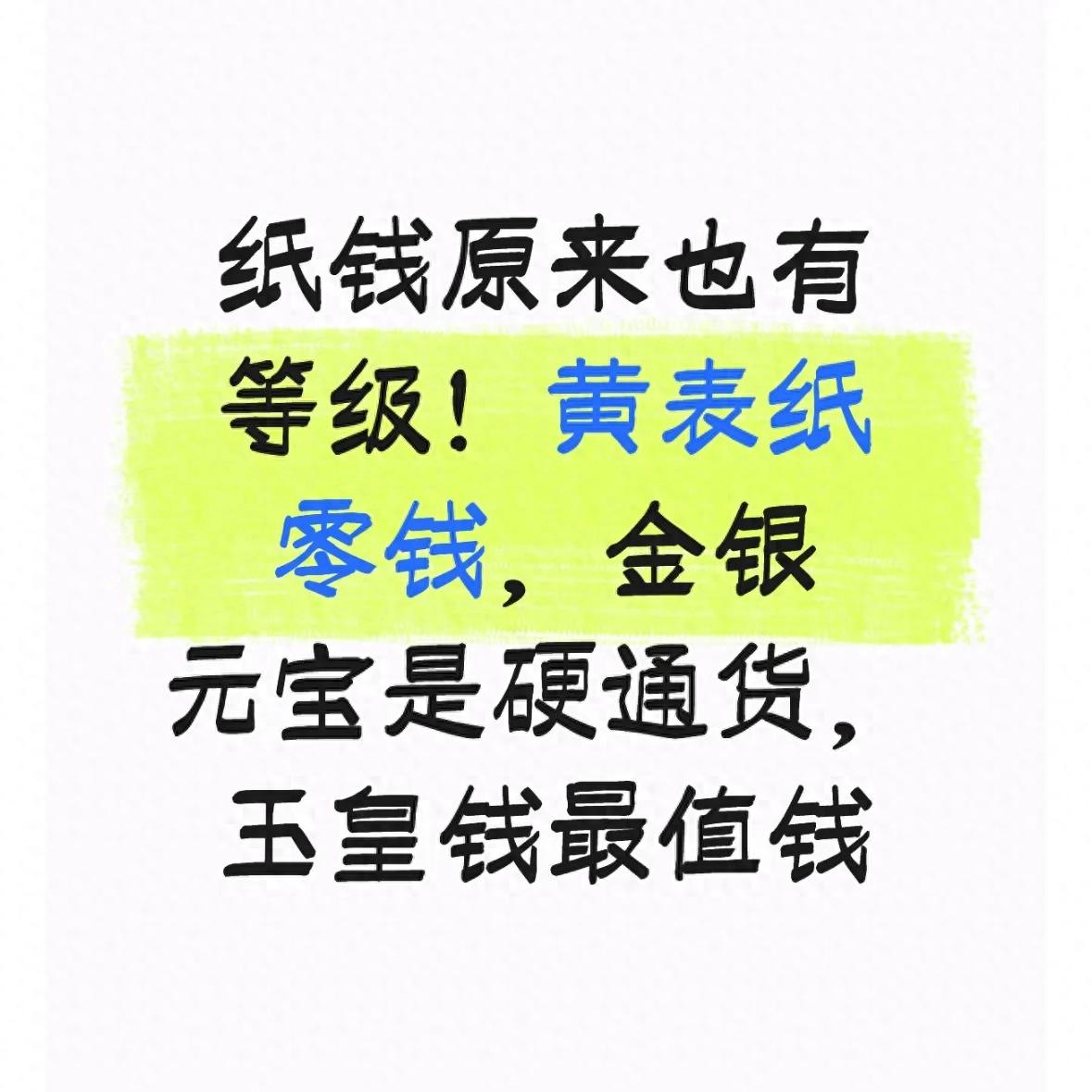
Most people simply purchase a stack of yellow paper or gold and silver ingots for burning, believing that the gesture suffices. However, not all paper money is the same; there are strict classifications based on denomination, purpose, and value.
Just as earthly currencies vary from small change to high-denomination bills, the paper money for the afterlife is categorized into everyday currency, hard currency, and top-tier money.
Yellow paper is considered everyday change, while gold and silver ingots are regarded as hard currency. The rare Jade Emperor money is the highest in rank, with the greatest value.
Many young people are unaware of these customs, leading to improper purchases and wasteful burning of money that lacks ceremonial appropriateness. This article aims to clarify the distinctions between three types of paper money, their intended uses, cultural significance, and correct practices, without promoting superstition but rather preserving traditional customs.
I. Cultural Knowledge: Different Levels of Paper Money
In traditional ancestor worship, burning paper money serves as a means for descendants to offer financial support to the deceased, ensuring their comfort in the afterlife.
Historically, there has been a clear hierarchy in the types of paper money used, each serving a specific function:
- Ordinary Yellow Paper: Equivalent to small change, used for everyday expenses.
- Gold and Silver Ingots: Considered high-value cash, widely accepted and circulated.
- Jade Emperor Money: The highest denomination, with special significance.
Using the wrong type of paper money can convey disrespect; for example, using only cheap change implies financial hardship for the ancestors, while burning high-value money inappropriately shows a lack of understanding.
II. Lowest Level: Yellow Paper
Yellow paper is the most common and affordable type of paper money, widely used for ancestor worship. Its plain yellow color and simple design make it a staple in households.
As a basic form of currency, yellow paper is akin to everyday small change, suitable for minor expenses and daily offerings.
Suitable Scenarios:
- Regular grave visits, simple rituals, and modest offerings during festivals.
Cultural Significance:
- Yellow paper represents ordinary intentions and is best used alongside gold and silver ingots to enhance the offering’s value.
III. Medium Level: Gold and Silver Ingots
Gold and silver ingots are the mainstream hard currency for ancestor worship, holding a higher status than yellow paper. Their standardized shape symbolizes wealth and prosperity, making them universally accepted.
Suitable Scenarios:
- Major festivals like Qingming and Zhongyuan, anniversaries, and significant ancestor worship days.
Cultural Significance:
- Gold ingots symbolize wealth and success, while silver ingots represent peace and stability. Together, they reflect the descendants’ filial piety.
IV. Highest Level: Jade Emperor Money
Jade Emperor money is the highest-ranking and most valuable type of paper money, often less known than yellow paper or ingots. It is characterized by its meticulous design and high denomination.
Suitable Scenarios:
- Important family ceremonies, significant anniversaries, and sincere blessings for stability and prosperity.
Cultural Significance:
- Due to its prestigious nature, Jade Emperor money should not be burned casually; it is reserved for significant occasions, emphasizing sincerity over quantity.
V. Proper Usage of the Three Types of Paper Money
Understanding the differences in paper money is crucial for respectful ancestor worship. Here are some guidelines for proper combinations:
- Casual Offerings: Use predominantly yellow paper with a few gold and silver ingots.
- Major Festivals: Burn more gold and silver ingots alongside yellow paper.
- Significant Ceremonies: Combine yellow paper, ingots, and a small amount of Jade Emperor money.
- Avoid Monotony: Using only yellow paper or only ingots can appear inadequate; a balanced approach is best.
Additionally, remember to observe respectful practices:
- Avoid burning in natural settings; prioritize fire safety.
- Maintain a solemn atmosphere, reflecting gratitude and respect.
- Focus on sincerity rather than extravagance in offerings.
VI. Rational Perspective on Customs
Understanding the hierarchy of paper money and traditional practices is not about promoting superstition but appreciating the cultural sentiments behind ancestor worship. Burning paper money symbolizes the living’s remembrance and gratitude towards the deceased.
As traditions evolve, modern practices like floral tributes and online memorials are becoming more common. While the forms may change, the core values of gratitude and remembrance should remain intact.
By fostering respect and appreciation for family, we honor our ancestors in the best way possible. The evolution of traditional practices towards more civilized and simplified forms will continue, ensuring that the essence of ancestor worship is preserved while adapting to contemporary life.
Comments
Discussion is powered by Giscus (GitHub Discussions). Add
repo,repoID,category, andcategoryIDunder[params.comments.giscus]inhugo.tomlusing the values from the Giscus setup tool.